
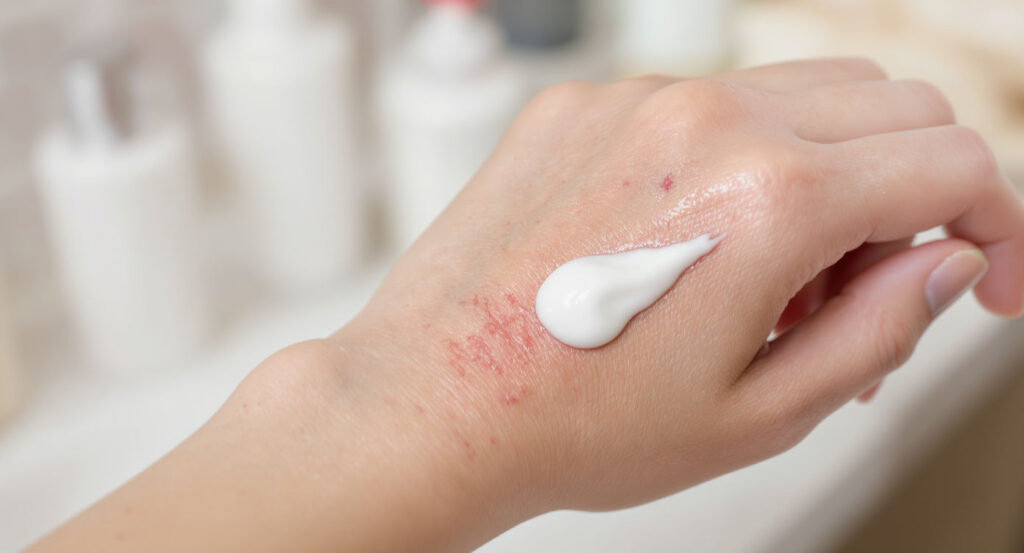
Many people notice an uncomfortable burning sensation when they apply lotion, especially if they already have sensitive or irritated skin. While this reaction is common, it’s often misunderstood.
A moisturizer should calm and protect your skin. If your lotion burns, stings, or makes your skin feel hot, it usually signals that your skin barrier is struggling. Instead of helping your skin recover, certain lotions may be aggravating already stressed skin.
Understanding why lotion burns on skin can help you choose products that support healing rather than triggering more irritation.
Why Lotion Burns on Sensitive Skin
The most common reason moisturizer stings when applied is a compromised skin barrier.
Your skin barrier is the outer protective layer of the skin. Its role is to keep moisture inside the skin while blocking irritants, allergens, and environmental stressors from penetrating too deeply.
When the barrier becomes weakened, the skin becomes more permeable. Ingredients that would normally sit comfortably on the surface can enter deeper layers of the skin and trigger inflammation or nerve irritation. This often leads to the familiar burning or stinging sensation people feel after applying moisturizer.
In other words, the lotion may not necessarily be harmful on its own. The reaction is often the result of skin that has become over-sensitized and less resilient.
Common Causes of a Damaged Skin Barrier
Several everyday habits can weaken the skin barrier over time. One of the most common triggers is frequent washing and exposure to harsh cleansers. Repeated washing removes not only dirt and bacteria but also the natural lipids that keep the skin barrier intact.
Hot water can also contribute to irritation. Heat strips the skin of protective oils and increases water loss from the surface of the skin, leaving it more vulnerable to sensitivity.
Over-exfoliation is another frequent cause. Many skincare routines now include chemical exfoliants, retinoids, or active ingredients designed to renew the skin. While these can be beneficial in moderation, using too many actives at once can overwhelm the skin and disrupt the barrier.
People who work in healthcare or jobs requiring frequent handwashing often experience these issues more intensely. Repeated exposure to soap, sanitizers, and water can lead to chronically irritated or over-washed skin, making lotions more likely to sting.
Ingredients That Can Make Lotion Sting
Even lotions marketed for sensitive skin can sometimes contain ingredients that irritate compromised skin.
Fragrance is one of the most common triggers. Fragrance compounds, including those derived from essential oils, can irritate sensitive skin even when the product is labeled as natural. Sensitivity to fragrance may develop gradually, meaning a product that once worked well may eventually begin to sting.
Certain alcohols can also increase irritation. Ingredients such as denatured alcohol may enhance absorption but can also dry the skin and increase sensitivity, especially when the skin barrier is already weakened.
Active ingredients can cause similar problems. Ingredients like exfoliating acids, retinoids, or high concentrations of urea may be beneficial for specific skin concerns but can become irritating when the skin barrier is compromised.
When skin is already inflamed, even normally gentle ingredients may feel uncomfortable.
Signs Your Skin Barrier May Be Compromised
Many people assume they simply have naturally sensitive skin, but sensitivity is often a temporary response to barrier damage.
Some common signs include persistent redness, tightness after washing, burning when applying moisturizer, and dryness that doesn’t improve with hydration. In some cases, even plain water can cause stinging.
Flaking or rough texture can also occur despite regular moisturizing, which is a sign that the skin barrier is struggling to retain moisture effectively.
Recognizing these symptoms early can help prevent the cycle of irritation from worsening.
What to Use Instead When Lotion Burns
If lotion burns your skin, the priority should shift from active treatments to barrier repair.
Hydrating ingredients like glycerin can help draw water into the skin without causing irritation.
Anti-inflammatory and soothing properties of Shea butter is useful in reducing redness and flare-ups.
Ceramides are particularly valuable because they help rebuild the structural components of the skin barrier. These lipids occur naturally in healthy skin and play a crucial role in maintaining moisture balance.
Panthenol, also known as provitamin B5, is another helpful ingredient because of its soothing and anti-inflammatory properties. Cholesterol and fatty acids are also important components of barrier repair formulas because they mimic the natural lipid structure of the skin.
Aloe vera rich moisturisers are safe for sensitive skin boasting properties that are hydrating, anti-inflammatory, antimicrobial, healing.
Emu oil rich lotions support gentle skin care for sensitive irritated skin. They have deep penetrating properties; are rich in anti-inflammatory properties; support skin barrier repair by preventing water loss from the skin.
Choosing products that focus on barrier support rather than exfoliation can make a significant difference in reducing burning sensations.
Fragrance-Free vs Unscented Skincare
When looking for the best moisturizer for sensitive irritated skin, it’s important to understand the difference between fragrance-free and unscented products.
Fragrance-free means no fragrance has been added to the formula. Unscented products, however, may still contain fragrance compounds designed to mask the natural smell of ingredients.
For people experiencing burning or stinging from lotion, fragrance-free products are usually the safer option.
How to Apply Moisturizer Without Triggering Burning
Small changes in how you apply skincare products can also reduce irritation.
Applying moisturizer to slightly damp skin helps trap water within the skin and improves hydration. Using lukewarm water instead of hot water helps protect the natural lipid layer of the skin.
Patting the skin dry rather than rubbing it with a towel can also reduce friction and inflammation.
During periods of irritation, simplifying your skincare routine can be particularly helpful. Limiting the number of products used allows the skin barrier to recover without additional stress.
When Burning Skin May Need Medical Advice
Although barrier damage is the most common cause of burning skin after applying lotion, there are situations where irritation may indicate something more serious.
Allergic contact dermatitis can cause similar symptoms, especially if the reaction is severe or persistent. If burning continues even after simplifying your routine and switching to gentle products, it may be worth consulting a dermatologist.
Professional evaluation can help identify specific ingredient sensitivities and guide treatment.
Final Thoughts
Experiencing burning or stinging when applying lotion is a classic damaged skin barrier symptom and a sign that your skin needs support, not stronger products.
Most of the time, the issue comes down to a weakened skin barrier caused by overwashing, over-exfoliation, or environmental stress. By choosing gentle, fragrance-free products and focusing on barrier repair, the skin can gradually return to a healthier and more resilient state.
The best lotion for sensitive skin should feel calming and comfortable. If your skincare routine causes pain or burning, it’s worth reassessing both the ingredients you use and how you care for your skin.